It happened last night! There I was, relaxing on my sofa, cuddled up with my kitty companion, Mazikeen, only to have my show interrupted by the first back-to-school ad of the season! In just a few weeks, a new class of freshmen will step into unfamiliar territory. The former kingpins of middle and high school hallways will once again have to adapt to a completely new landscape. For last year’s high school seniors, it’s often their first experience living on their own—a seemingly endless list of "firsts" capable of triggering alarm bells in even the most self-assured student. For those navigating the world with a neurodiverse mind or a history of trauma, this transition can feel overwhelming.
While no strategy can eliminate the angst of entering an unmapped environment, understanding why your body reacts this way changes everything. By learning the mechanics of your nervous system's threat response, you can step in as your own steady authority—lowering the volume on internal alarms, easing transition stress, and regaining emotional regulation when new surroundings kick up static.
When you stub your toe, the pain isn’t created within your toe. Within our nervous systems, we have a neuromatrix that decides if we are facing a real threat and if we should feel pain - whether that is physical pain or an emotional response to potential danger - this neuromatrix determines if we will feel pain or emotional distress and how intense that response needs to be. When I first learned this, it gave me pause. I had always thought pain and distress were objective sensations. I stub my toe. I feel pain. Simple.
Turns out it isn’t remotely simple. If we take our stubbed toe example, we can see how this plays out. You’re going through your day and suddenly stub your toe. Your thalamus receives the message and passes it along to the different parts of the matrix. The somatosensory cortex maps out where the injury took place and measures its intensity. (When the body map isn’t current, you experience phantom pain.) The limbic system, which is made up of the amygdala and hippocampus, adjusts the response signal to reflect the emotional weight of the situation, and your contextual memories. The anterior cingulate cortex determines how much attention, suffering, or unpleasantness that we register with the event. Finally, the prefrontal cortex evaluates the overall context, logic, past experiences, and meaning to the threat. These last three portions of the system explain why a stubbed toe on a Monday after you just had a fight with a loved one hurts more than when it happens after you “hit the lottery.”
We see this system clearly on display when we are watching toddlers at play. When the tiny-tot stumbles and scrapes their knee, they don’t have enough life experience to accurately determine the severity of the situation. More often than not, the first thing you will see the toddler do is look over to their adults to see how they respond. If they respond with calmness and/or lightness, more often than not the child will get up and continue to play. If their adult responds with alarm and concern, the waterworks are most likely going to follow.
Now that we understand how this key system works and feeds pain and alarm signals to our body, we can apply that knowledge to help our system adapt and re-regulate more easily in novel situations by following the four simple strategies of the Regulation Framework.
The Regulation Framework
Strategy 1: Feed the Cortex
You are about to enter an experience you have never lived through. Help your pre-frontal cortex by seeding it with contextual information about the new environment before your first day on campus. Spend some time studying the campus map. You may not have your schedule yet, and you may not know what buildings you will be in for your lectures, but you can figure out the “Big Three” (eat, sleep, play). Where are the dorms, the cafeteria, the student center? How do you move across campus from each of these to the others? Does the map show any landmarks that you can use to help guide you on your maiden voyage? Are there any places on the map that you are absolutely dying to explore? Where are they in relation to the dorms or the student center?
Strategy 2: Access and Acknowledge
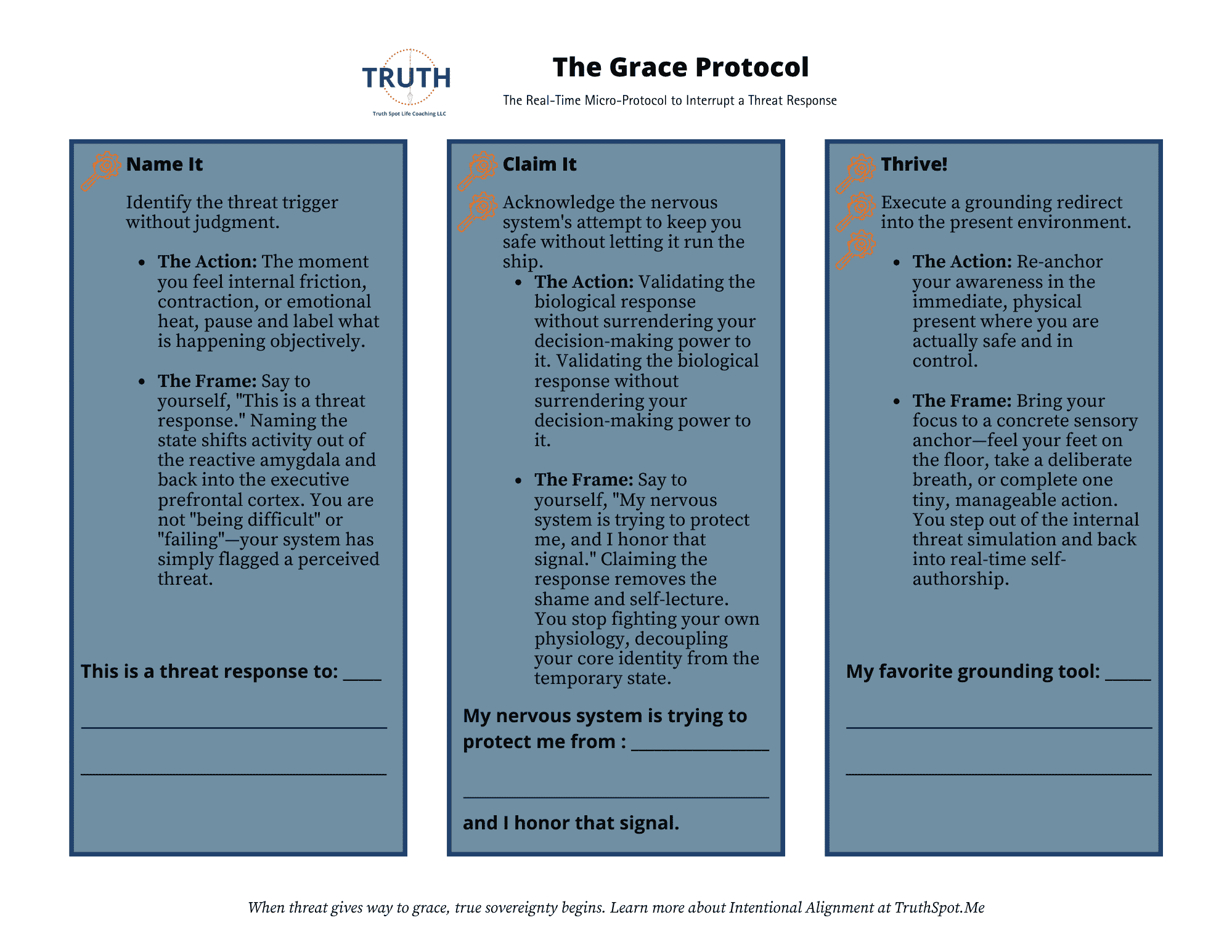
Once you are on campus, you may find surges of emotions or overwhelm. Don’t fight the surge, label what is going on for you accurately. Name your state of mind. “Today is my first day on campus and it is so huge! I’m afraid I will get lost and miss my classes!”
Take a deep breath, and gently remind yourself that your system is simply scanning the environment and it’s being extra cautious because it has never been here. This is a great time to access the information you pre-loaded into your brain. Orient current location to your “Big Three?” Where are the landmarks you identified?
Sometimes, in trying to provide context, your brain will pull in memories from past experiences that it thinks are similar. Remind yourself that you are in the present moment and not that past event that really triggered you.
Strategy 3: Micro-Safety Tactics
Grounding exercises are fabulous tools for creating feelings of safety. Drop you weight solidly into your feet while standing near a wall or focusing your gaze on an unmoving object. Go old school and play “Eye Spy;” start naming all the things you can see around you.
Somatic discharges help anxious energy to escape your body. A “physiological sign” can help it move through you. You can do this by simply taking in two quick inhalations through your nose followed by one long exhale through your mouth. This will manually flip the parasympathetic switch between “fight or flight” and “rest and digest.” You can also take a lesson from your favorite fur baby and shake it off, literally.
Strategy 4: Decompress and Integrate
Once the situation has passed and you can safely decompress. Give your body the space it needs to decompress. Whether your body needs to shake, tears need to fall, or you just need to sit quietly and listen to music, honor your body’s and mind’s needs. They have safely carried you through an anxiety provoking new situation. Once you are feeling more calm, take the time to celebrate and update your pre-frontal cortex with the new information you have gathered. You’ve learned to navigate your way across campus. You’re way more resilient than you thought you were. You survived being somewhere new and returned yourself safely to your safe spot. These are all valuable details to update your mental database with and they will help reconfigure the context your brain reads in new situations. I hope these tips make your transition this fall much smoother. I love to hear how it went for you. Which micro-safety tactic worked best for you?